

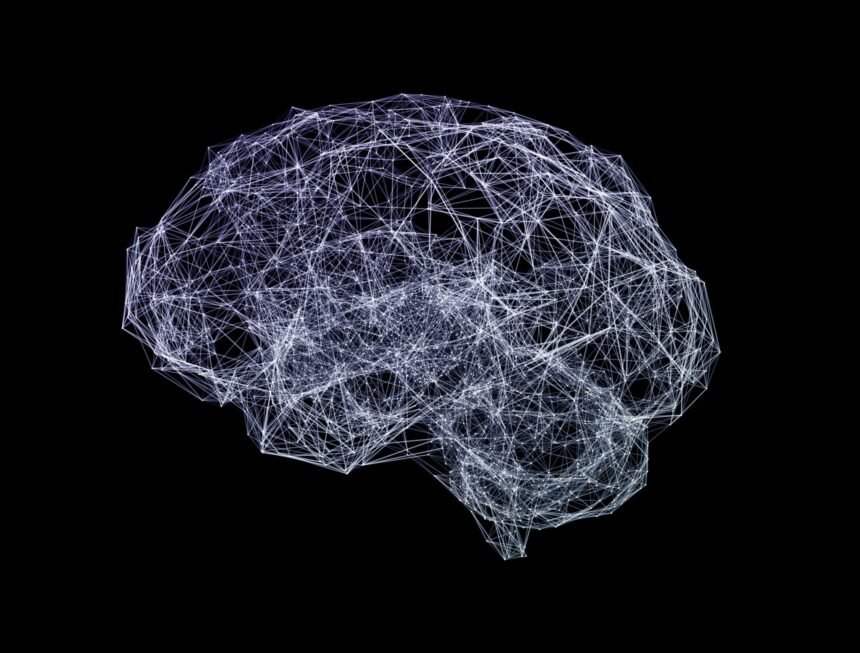

The Infinite Enigma: How Modern Science Stalled at the Gates of the Human Brain
For more than half a century, contemporary neuroscience operated under a bold conviction: treat the three-pound organ inside the human cranium like an ultra-complex computational circuit, map its wiring, and its deepest secrets would unravel. Yet, as the field reaches unprecedented technical precision in 2026, many of the world’s leading neuroscientists and philosophers are admitting an uncomfortable truth—science has mapped the hardware, but has fundamentally failed to decipher the mind.
The Reductionist Trap: Mapping Wiring Without Meaning
Modern laboratories are equipped with functional Magnetic Resonance Imaging (fMRI), two-photon calcium imaging, and automated electron microscopes capable of tracing neural axons at the nanometer scale. We know that the human brain contains roughly 86 billion neurons linked by nearly 100 trillion synaptic connections.
However, locating which region “lights up” during grief, arithmetic, or visual perception has not brought researchers any closer to explaining how or why physical tissue experiences those states. Neuroscience has produced magnificent atlases of neural real estate, yet the fundamental operating code remains as opaque as it was a century ago.
“We have built telescopes capable of peering across the observable universe and microscopes that divide atoms, yet we cannot explain why a collection of biological sodium-potassium pumps creates the feeling of tasting an apple.”
The “Hard Problem” Remains Unbroken
In theoretical science, the gap between neural activity and inner awareness is known as the “Hard Problem of Consciousness.” While cognitive science can explain sensory processing, motor control, and memory recall (the so-called “easy problems”), it continually hits an impenetrable wall when addressing qualia—the subjective texture of lived experience.
Computational theories frequently compare the brain to silicon chips, yet the comparison breaks down under scrutiny. A digital computer processes binary inputs through deterministic logic gates without subjective awareness. In contrast, biological brains do not merely process data; they generate a continuous, unified perspective of reality that defies pure mechanical reduction.
Neurochemical Band-Aids vs. Biological Reality
The limitations of modern neurological models are most evident in psychiatric medicine. For decades, mental illnesses such as clinical depression, anxiety, and schizophrenia were reduced to simple “chemical imbalances.” While pharmacology has created treatments that manage symptoms, root biological mechanisms remain poorly understood.
Brain disorders do not behave like straightforward mechanical failures. Two individuals with identical localized brain lesions can display entirely different behavioral symptoms, exposing the limitations of our current linear, cause-and-effect biological paradigms.
A Paradigm Shift on the Horizon
The apparent stall in unlocking the brain’s deepest mysteries does not signify a failure of curiosity, but rather the limits of 19th- and 20th-century mechanistic frameworks. Emerging disciplines are now turning toward quantum biology, non-linear dynamical systems, and integrated information theories in search of new paradigms.
Until science establishes a unified framework capable of bridging objective physical matter with subjective inner experience, the human brain will continue to reign as the most complex, uncharted territory in the known universe.
Jammu Mirror — A Fortnightly Publication | A Subsidiary of Frazerkart OPC Private Limited
© 2026 Jammu Mirror. All Rights Reserved.