

From Phone Batteries to Global EV Dominance: The Unstoppable Rise of BYD
How a modest Shenzhen battery manufacturer transformed into the world’s most formidable electric mobility powerhouse through sheer vertical integration and engineering grit.
In the high-stakes arena of global clean-energy transport, the tectonic plates have shifted. While legacy automakers in Detroit and Stuttgart wrestled with shifting transition timelines, Chinese manufacturing giant BYD (Build Your Dreams) orchestrated one of the most remarkable industrial expansions of the modern era, reshaping the global automotive landscape from the ground up.
The Pragmatic Genesis
Founded in 1995 in Shenzhen by chemist Wang Chuanfu, BYD began not on a test track, but on a modest factory floor manufacturing rechargeable nickel-cadmium batteries for mobile phones. In an era when Japanese giants dominated high-tech electronics, BYD competed by dissecting expensive automated processes and replacing them with highly trained, cost-effective manual production lines. Within a few years, it was supplying power packs to Motorola and Nokia.
The pivotal pivot arrived in 2003, when BYD acquired the struggling state-owned Qinchuan Automobile Company. The move puzzled industry observers at the time, but Chuanfu’s vision was straightforward: cars were destined to run on electricity, and whoever controlled the battery chemistry would control the automotive sector.
Key Milestones in the BYD Journey
- 1995: Founded in Shenzhen as a mobile phone battery supplier.
- 2003: Acquired Qinchuan Auto to lay early automotive groundwork.
- 2008: Secured a landmark 10% equity investment from Warren Buffett’s Berkshire Hathaway.
- 2020: Launched the proprietary, ultra-safe LFP “Blade Battery.”
- 2022: Fully discontinued pure internal combustion engine (ICE) passenger cars to focus entirely on NEVs.
The Ultimate Weapon: Radical Vertical Integration
Unlike traditional carmakers that assemble outsourced parts, BYD builds almost everything in-house. From battery cells, microchips, and electric motors to suspension systems and chassis stamping, BYD controls up to 75% of its total vehicle components. It even operates its own fleet of specialized cargo ships to transport finished vehicles across continents.
This deep vertical integration delivers two decisive advantages: unparalleled supply chain resilience and aggressive cost control. When global supply chains broke down, BYD adapted within days, consistently undercutting competitors on price while maintaining strong operating margins.
The Blade Battery & Mass-Market Adoption
The turning point in global perception arrived with the introduction of the Blade Battery in 2020. Using Lithium Iron Phosphate (LFP) chemistry engineered into flat, structural blades, BYD eliminated fire risks during puncture tests while maximizing pack energy density. The innovation brought high-range electric mobility to everyday consumers without the premium price tags typical of Western EV makers.
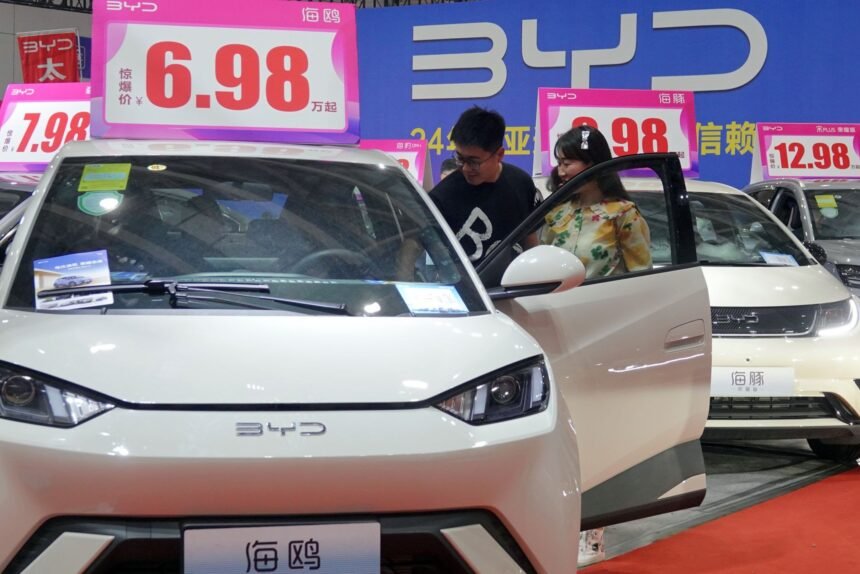
By delivering affordable hatchbacks, versatile sedans, and high-end commercial electric buses across Europe, Southeast Asia, and Latin America, BYD proved that the electric transition succeeds when vehicles are accessible to the masses, not just luxury buyers.
Looking Forward
BYD’s evolution from a scrappy battery lab into a global clean-tech juggernaut is a case study in long-term strategic patience, manufacturing discipline, and rapid technological iteration. As regional markets look toward sustainable transportation frameworks, BYD’s story stands as definitive proof that mastering core technologies is the ultimate competitive advantage.