
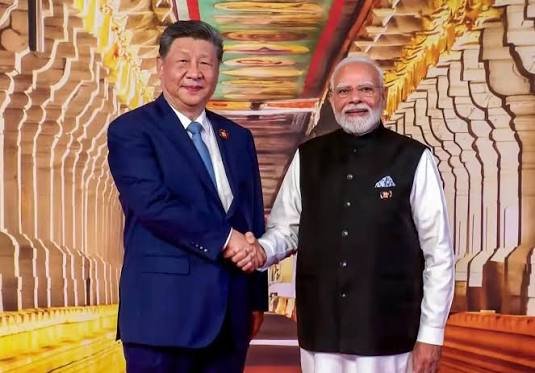

PM Modi to Meet Chinese President Xi Jinping at 18th BRICS Summit in Delhi Today; Border Disengagement and Bilateral Trade Take Center Stage
Marking Xi Jinping’s first trip to India in seven years, the high-profile bilateral meeting at Bharat Mandapam aims to solidify peace along the Line of Actual Control (LAC) and navigate strategic economic recalibrations across the Global South.
Modi – Xi High-Level Bilateral Dialogue
Bharat Mandapam Convention Centre, Pragati Maidan
Key Highlights at a Glance
- First Visit in 7 Years: Chinese President Xi Jinping lands in New Delhi for his first trip to India since the 2019 informal summit in Mamallapuram.
- LAC Disengagement Priority: Both leaders will review military disengagement protocols and seek long-term stability across Eastern Ladakh and Northern Borders.
- Trade & Market Access: Discussions will focus on reducing the trade deficit, stabilizing technology supply chains, and facilitating smoother cross-border business.
- BRICS Leadership: India hosts the expanded 10-nation summit under the theme “Building for Resilience, Innovation, Cooperation and Sustainability”.
NEW DELHI — In what is being hailed as a pivotal diplomatic milestone for regional stability and global economic realignment, Prime Minister Narendra Modi is set to hold a comprehensive bilateral meeting with Chinese President Xi Jinping today on the sidelines of the 18th BRICS Leaders’ Summit at New Delhi’s iconic Bharat Mandapam.
The visit marks President Xi’s first arrival on Indian soil in seven years—his last trip being for the second India-China Informal Summit in Mamallapuram, Tamil Nadu, in October 2019. Coming against the backdrop of sustained efforts to fully restore normalcy along the Line of Actual Control (LAC), the dialogue carries immense strategic weight for both nations and the broader Asian continent.
Border Stability and LAC Disengagement in Focus
High on the agenda of the Modi-Xi talks is the comprehensive review of border management mechanisms. Following multi-tiered military and diplomatic talks over the past two years, both leaders are expected to evaluate the progress achieved in de-escalating troop deployments along the friction points in Eastern Ladakh and the broader Himalayan frontier.
According to sources within the Ministry of External Affairs (MEA), India will reiterate its firm stance that sustainable peace and tranquility along the borders remain the fundamental baseline for normalized bilateral ties. The two heads of state are anticipated to issue strategic guidance to their respective military commanders to ensure smooth patrol protocols and maintain operational predictability.
“Peace and stability along the Line of Actual Control are essential for the prosperity of over 2.8 billion people in our two nations. Moving forward requires mutual respect, mutual sensitivity, and mutual interest.” — Official Diplomatic Statement, MEA India
Economic Relations, Trade Deficit, and Supply Chains
Beyond security concerns, economic diplomacy forms a critical pillar of today’s engagement. Despite past political friction, bilateral trade between India and China reached unprecedented highs, exceeding $135 billion in recent trade cycles. However, India’s widening trade deficit remains a central concern for policymakers in New Delhi.
PM Modi is expected to advocate for greater market access for Indian pharmaceutical exporters, agricultural products, and IT services in China. Concurrently, discussions will touch upon easing restrictions on essential raw materials, solar components, and electronics manufacturing inputs that power India’s burgeoning domestic industrial sectors.
“The expanded BRICS platform offers a genuine mechanism for developing economies to construct resilient supply chains, foster technological innovation, and champion a fairer multilateral order.”
— Chinese Foreign Ministry Spokesperson Ahead of Delhi SummitStrategic Relevance for Jammu & Kashmir and Ladakh
For readers in Jammu & Kashmir and the trans-Himalayan frontier of Ladakh, this summit holds special resonance. Years of border standoffs directly impacted border infrastructure development, trade corridors, and local border-community livelihoods across northern India.
Security analysts based in Jammu emphasize that any concrete breakthrough in border disengagement will allow India to reallocate strategic focus toward economic development and infrastructure projects across the Union Territories of J&K and Ladakh. Peace along the Northern borders also enhances security stability across the Karakoram corridor and surrounding high-altitude regions.
The 18th BRICS Summit Agenda at Bharat Mandapam
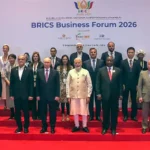
The bilateral dialogue takes place against the backdrop of the two-day 18th BRICS Leaders’ Summit, hosted under India’s 2026 Chairship with the overarching theme: “Building for Resilience, Innovation, Cooperation and Sustainability.”
Following its historical expansion—now encompassing founding members Brazil, Russia, India, China, and South Africa alongside new entrants including the UAE, Iran, Ethiopia, Egypt, and Indonesia—the grouping represents over 45% of the world’s population and nearly 30% of global GDP.
Throughout the summit, key sessions will tackle cross-border payment mechanisms using local currencies, deep-tech innovation sharing, food and energy security amid global geopolitics, and joint climate resilience initiatives tailored for the Global South.