

Himalayan Deluge: MEA Mobilizes Specialized Teams and 95 Tonnes of Aid to Nepal; Intense Efforts Continue for 275 Missing Indians
Catastrophic flash floods near the Nepal-Tibet frontier leave trail of destruction along the Trishuli River basin; 166 Indian nationals safely rescued and 1,907 transit safely from China as joint teams scour disaster zones.
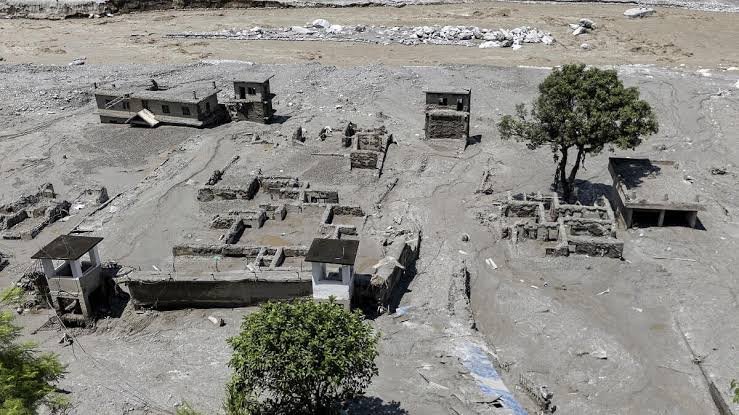
NEW DELHI: Massive humanitarian and tactical search-and-rescue operations remain underway across north-central Nepal following catastrophic flash floods triggered by an ice-and-rock avalanche along the Nepal-Tibet border region. In a comprehensive briefing on the trans-Himalayan emergency, the Ministry of External Affairs (MEA) confirmed that while over 160 Indian citizens have been evacuated to safety, concerted inter-governmental efforts are ongoing to trace 275 Indian nationals who remain missing.
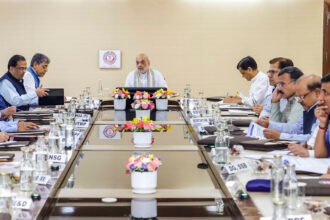
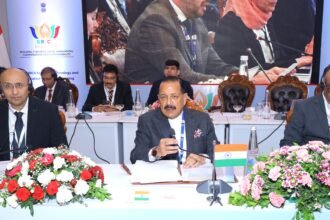
Addressing media personnel, MEA Official Spokesperson Randhir Jaiswal outlined the multi-pronged rescue operations being mounted in coordination with authorities in Kathmandu and regional administration in China. The disaster, which originated on August 26, caused massive swelling along the Trishuli, Bhote Koshi, and connected mountain river systems, wiping out key road links, suspension bridges, and downstream hydroelectric structures.
Status of Indian Nationals and Kailash Pilgrims
Providing granular details on the tracing operations, the MEA reported that 166 Indian nationals have been safely retrieved from inundated valleys and treacherous terrains across affected districts like Rasuwa and Nuwakot. In a positive cross-border development, official channels confirmed that 1,907 Indian travelers—many of whom had undertaken the Kailash Mansarovar Yatra—have successfully and safely crossed over into Nepal from the Tibet Autonomous Region in China, with zero Indian pilgrims reported stranded on the Tibetan side.
Rescue teams, including Indian mission officials on the ground and local volunteers, have carried out high-stakes extractions over the past several days. Among those brought to safety from Trishuli Bazaar was an Indian family, including a five-year-old child, who were quickly assisted by the Indian Embassy in Kathmandu to facilitate their safe return flight to India. Earlier, workers stranded at local infrastructure projects, including the Trishuli-1 and Trishuli-3A hydropower complexes, were also brought out through coordinated tunnel rescue missions.
Ground Deployment of Specialized Units and 95 Tonnes of Aid
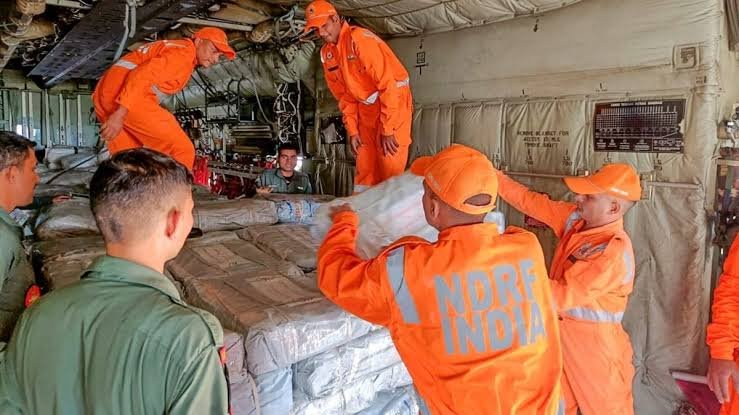
Demonstrating its commitment to regional humanitarian assistance, India has dispatched an air bridge consisting of seven military transport sorties delivering approximately 95 tonnes of emergency relief materials directly into Kathmandu. The aid shipments include heavy-duty dewatering pumps, portable generators, emergency water purification units, field tents, dignity kits, high-potency antibiotics, and dry rations.
Beyond material supplies, India has placed specialized human assets on the front lines. A dedicated contingent of 54 Indian personnel is actively embedded with Nepalese disaster management teams. This operational contingent includes:
- 30 Tunnel Rescue Experts: Tasked with entering flooded civil engineering subterranean passages, power plants, and blocked bypasses to locate trapped survivors.
- 19 Forensic Pathologists and DNA Specialists: Equipped with forensic diagnostic kits to assist local authorities with rapid identification and dignified handover of recovered mortal remains.
- 5-Member Specialized Medical Brigade: Deployed in triage camps to administer critical trauma resuscitation and emergency healthcare.
To restore severed connectivity across mountain gorges where at least 35 motorable bridges and 45 suspension spans collapsed under the torrent, India has already mobilized modular bridging equipment. Convoys bearing parts for a 230-foot modular steel bridge have arrived, with equipment for additional Bailey bridges being expedited to reconnect isolated settlements in Rasuwa and Nuwakot.
Devastating Toll in Nepal and Round-the-Clock Helplines
Official reports from Nepal’s National Disaster Risk Reduction and Management Authority (NDRRMA) indicate an unprecedented humanitarian emergency. Over 1,295 fatalities have been verified across affected districts—with Chitwan, Nawalparasi, Nuwakot, and Rasuwa enduring the heaviest toll. More than 12,000 individuals have been rescued via hundreds of helicopter sorties, while an estimated 5,000 people remain unaccounted for regionally. Over 32,000 households have seen property destruction or displacement.
To assist anxious family members across India, the Ministry of External Affairs has activated round-the-clock crisis control rooms in New Delhi alongside operational emergency helplines at the Indian Embassies in Kathmandu and Beijing. Officials reiterated that all diplomatic channels, defense aviation assets, and logistical bridges will remain functioning at peak surge capacity until every citizen is accounted for and safe passage is secured.