

Subterranean Battle in the Himalayas: Indian Tunnel Specialists and Nepal Army Intensify Search at Flood-Hit Chilime and Langtang Hydro Sites
Confronting deep silt surges, compromised conduits, and unstable structural cavities, joint disaster response squads utilize improvised flotation rigs, dewatering pumps, and subterranean safety lines to trace unaccounted hydro personnel in rugged Rasuwa.
KATHMANDU / RASUWA: In one of the most hazardous subterranean search-and-rescue operations witnessed in the Himalayan belt, elite Indian tunnel rescue personnel, working in tandem with the Nepal Army, have deepened their penetration into the flooded subterranean corridors of the Chilime and Langtang hydroelectric projects. Following late-August glacial ruptures and torrential flash floods that swept across the Bhotekoshi and Trishuli river systems, emergency rescue specialists are battling waist-deep marshy silt, submerged debris, and precarious mountain geography to locate dozens of workers cut off underground.
Mission Brief: Status of Operation at Ground Zero
- Strategic Deployments: A 24-member specialized Indian tunnel rescue contingent is divided across two critical operational units at the Chilime and Langtang installations in northern Rasuwa.
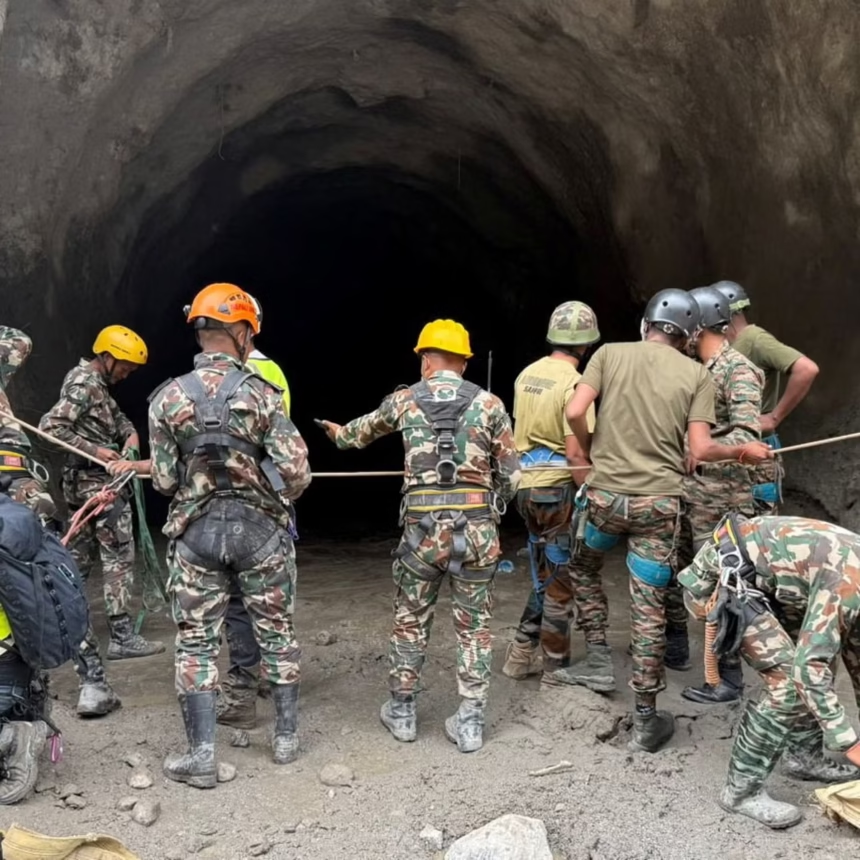
- Penetration Milestones: Rescuers have established firm anchor footholds, rigged safety lifelines, carved makeshift interior tracks, and probed deep beyond 185 metres inside subterranean adits.
- Complex Obstacles: Sludge resembling quicksand, colossal car-sized boulders blocking portal entries, and continuous seeping floodwaters have necessitated continuous pumping operations.
- Parallel Support: A 19-member Indian medical-forensic unit coordinates DNA protocols at Kathmandu’s forensic laboratories, while field medics assist isolated mountain hamlets.
Penetrating Swamped Tunnels Amid Quicksand Conditions
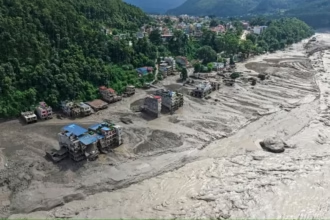
The disaster—triggered by an avalanche and high-altitude glacial rupture near the Nepal-Tibet border—unleashed violent torrents down the steep gorges of Rasuwa, sweeping away road corridors, suspension links, and surface switchyards. At the Chilime and Langtang plants, surging river waters submerged headrace portals, trapping water, silt, and heavy rocks inside underground machinery caverns.
Initial efforts were severely obstructed because the physical tunnel portals were concealed under millions of tons of mud and boulder scree. By synchronizing topographical maps, historic GIS layout blueprints, and aerial surveillance sweeps, engineers pinpointed portal coordinates before initiating mechanical excavation.
“Despite severe terrain limitations and swamp-like marshy floors inside the subterranean caverns, the joint teams established an anchor, secured guiding safety lines, and deployed specialized floats to navigate deep into the conduits. Operations continue around the clock to exhaust every chance of survival.” — Field Dispatch Summary, Indian Diplomatic Mission in Nepal
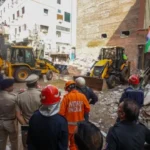
To advance heavy mechanical gear into the Chilime tunnel, Indian technical crews and military engineers cut a temporary reinforced operational track right through the muck, concurrently excavating diversionary culverts to pump standing water back toward the primary river drainage.
| Operational Parameter | Chilime Hydro Complex | Langtang Hydro Facility |
|---|---|---|
| Primary Geography | Syabrubesi corridor, upper Rasuwa | Langtang alpine gorge sector |
| Tactical Foothold | Stabilized entryway, safety tracks laid, dewatering active | Probed beyond 185 metres through silt deposits |
| Core Equipment Deployed | Improvised floats, dewatering pumps, portable breathing rigs | Acoustic detectors, specialized winch lines, geotechnical sensors |
| Coordinating Headquarters | Nepal Army Forward Command Post, Bidur (Nuwakot) | Nepal Army Tactical Base, Bidur (Nuwakot) |
Joint Taskforces and the Race Against Air Pocket Depletion
The painstaking mission at Chilime and Langtang follows a dramatic breakthrough at the neighboring Upper Trishuli 3A project, where rescue squads extracted two trapped hydro employees who survived nine days in subterranean darkness by finding high air pockets. That survival has fueled continued search efforts across Rasuwa’s remaining tunnels, where hundreds of project staff initially remained unaccounted for.
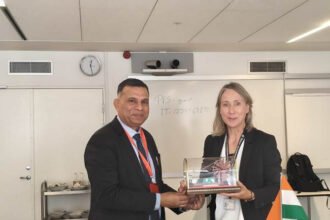
Operating out of the logistics staging center at Bidur in neighboring Nuwakot district, Indian Ambassador to Nepal Naveen Srivastava inspected operational hubs and conferred with Nepal’s Home and Energy ministries to streamline cross-border emergency equipment transit. Specialized civil engineering experts—including authorities from the International Tunnelling and Underground Space Association—are advising teams on structural stability to avert internal cavern collapses during boulder removal.
Jammu Mirror Perspective: Climate Fragility in the Trans-Himalayas
The unfolding crisis in Nepal’s northern valleys offers an urgent cautionary case study for the entire Himalayan arc, including Jammu, Kashmir, and Himachal Pradesh. As high-head run-of-the-river hydropower developments proliferate along steep glaciated river systems, the threat of sudden glacial burst floods, moraine collapses, and river impoundments grows sharper.
The ongoing Chilime-Langtang mission demonstrates that disaster resilience for high-altitude linear infrastructure demands specialized subterranean rescue doctrines, permanent emergency refuge shelters within mountain tunnels, and standardized cross-border rapid response pacts across the South Asian Himalayan belt.